The Rising of AI
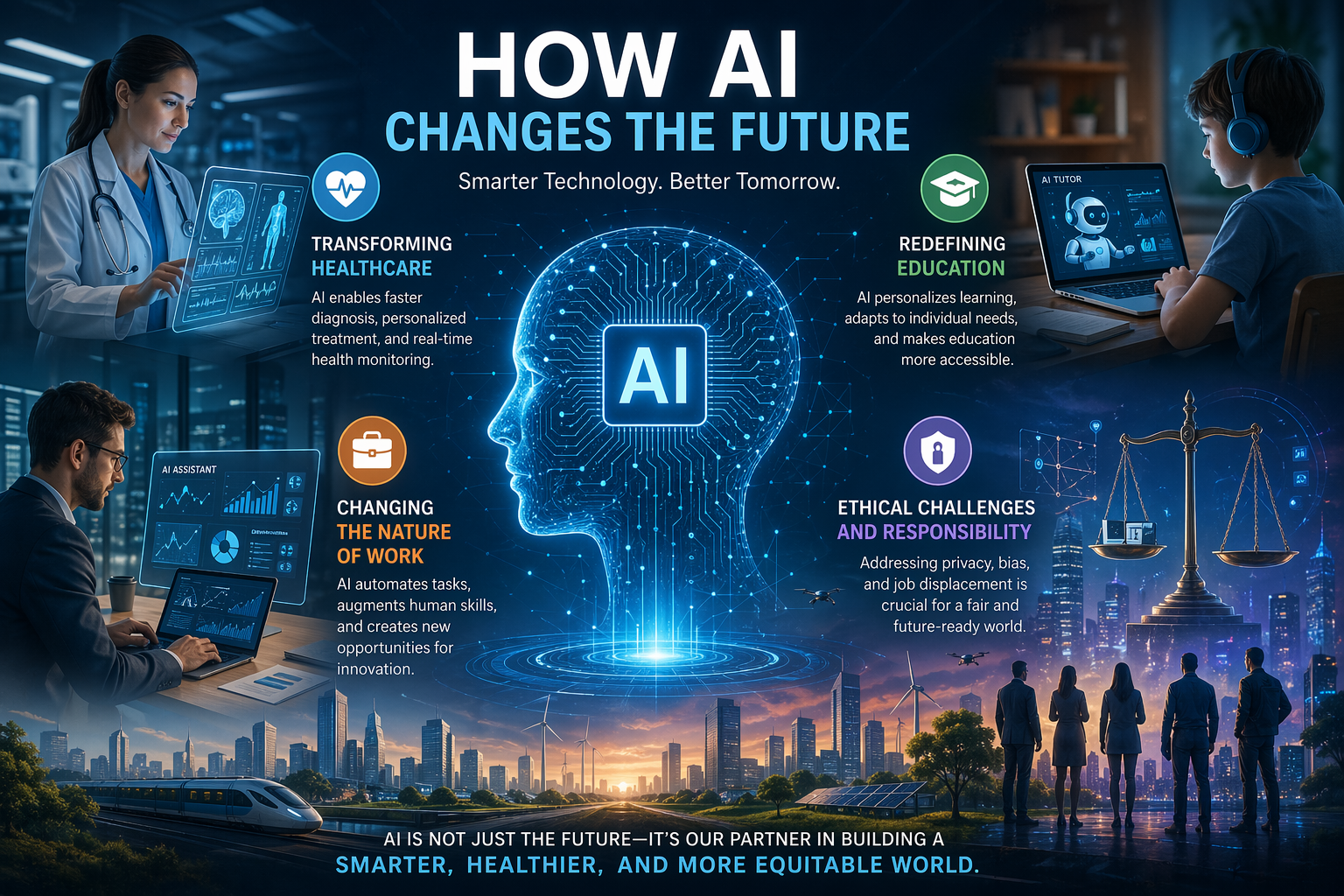
How AI Is Changing the Future
Artificial Intelligence (AI) is no longer a concept confined to science fiction—it’s a powerful force actively reshaping how we live, work, and think. From personalized recommendations on streaming platforms to advanced medical diagnostics, AI is quietly becoming the backbone of modern innovation. But what does this transformation really mean for our future?
The Rise of Intelligent Automation
One of the most visible impacts of AI is automation. Tasks that once required human effort—data entry, customer support, even complex analysis—are now being handled by intelligent systems. This doesn’t just mean faster processes; it means a fundamental shift in how businesses operate.
Companies are leveraging AI to reduce costs, improve efficiency, and scale operations in ways that were previously impossible. While some fear job displacement, the reality is more nuanced: AI is also creating new roles that demand creativity, critical thinking, and emotional intelligence—skills machines can’t easily replicate.
Transforming Healthcare
AI is revolutionizing healthcare by enabling faster and more accurate diagnoses. Machine learning models can analyze vast amounts of medical data, detect patterns, and assist doctors in making better decisions. From predicting diseases before symptoms appear to personalizing treatment plans, AI is pushing healthcare toward a more proactive and patient-centered approach.
In the future, wearable devices combined with AI could continuously monitor health, alerting individuals and doctors to potential issues in real time.
Redefining Education
Education is becoming more personalized thanks to AI. Adaptive learning platforms can tailor content to individual students based on their strengths, weaknesses, and learning pace. This means students are no longer forced into a one-size-fits-all system.
AI tutors, automated grading systems, and intelligent content recommendations are making education more accessible and efficient. As technology evolves, learning could become a lifelong, highly customized experience for everyone.
Changing the Nature of Work
The workplace of the future will look very different. AI is not just automating tasks—it’s augmenting human capabilities. Professionals can now rely on AI tools to analyze data, generate insights, and even assist in creative processes like writing or design.
Remote work, powered by AI-driven collaboration tools, is becoming more seamless. Decision-making is increasingly data-driven, and organizations that embrace AI are gaining a competitive edge.
Ethical Challenges and Responsibility
With great power comes great responsibility. As AI becomes more integrated into society, ethical concerns are growing. Issues like data privacy, algorithmic bias, and job displacement must be addressed carefully.
The future of AI depends not just on technological advancement, but on how responsibly we use it. Transparent systems, fair policies, and human oversight will be critical in ensuring AI benefits everyone.
The Road Ahead
AI is not a distant future—it’s happening now. Its influence will only grow stronger in the coming years, touching every aspect of our lives. The key is not to fear this change, but to understand and adapt to it.
Those who learn to work alongside AI, rather than against it, will be best positioned to thrive in this new era. The future is not just about smarter machines—it’s about smarter humans using them.
Summary
AI is a tool, not a replacement for humanity. It has the potential to solve some of the world’s biggest challenges, from climate change to global healthcare. But its true impact will depend on how we choose to shape and guide it.
The future isn’t being written by AI alone—it’s being co-authored by all of us.